The UK is famed all over the world for our traditional country pubs. With the old wood beams, comfortable chairs (or bar stool) and a menu where you can guarantee some classic dishes (think fish and chips, burgers and pies).
We’re very lucky to have so many great pubs so close to us. In fact the Eden district (which we are just 1 mile from) was voted the UKs number 1 place to live, in part by the high ratio of pubs per person. That’s the kind of stat we like.
This list is just a quick one and covers a range of pubs, from the ones in Keswick to the surrounding area.
Swinside Inn
The Swinside Inn is probably one of our favourite pubs in the area. At the foot of Cat Bells and with panoramic views all around the Newlands Valley it’s the perfect country pub for lunch or tea (dinner for the southerners).
swinsideinn.co.uk
Dog and Gun
It might well be a Green King Pub, but it’s a good one. A firm favourite of our guests. Very dog friendly and delicious food, right int he middle of Keswick
www.greeneking-pubs.co.uk/pubs/cumbria/dog-gun/
The Wainwright
The Wainwright is a cracking independent pub right in the middle of town. Boasting an mind boggling array of local ales it’s the perfect place to enjoy a post walk pint.
www.thewainwright.pub
The Pheasant Inn
It would be very hard to beat the Pheasant Inn, Keswick for food. This cosy 17th Century pub is a short stroll from the centre of Keswick and a perfect place for an evening meal of Sunday lunch option. Get your booking in early to avoid dissapointment.
thepheasantinnkeswick.co.uk
Kings Head
The Kings Head at the foot of Helvellyn and Dunmail Raise is the ideal place for a celebratory end of day pint. Just a couple of miles from Low Nest put your feet up in front of the roaring fire and enjoy the ambience of this old Inn, which was once a vital stop before and after travelling over Dunmail Raise.
www.lakedistrictinns.co.uk/kings-head
The National Trust is synonymous with the Lake District. This might be in part due to it’s connection to Mrs Hellis (Beatrix Potter), who used her mass of wealth to purchase, preserve and then donate vast numbers of farms and acres of land to the National Trust. But there’s far more than just land and farms to be enjoyed in the Lakes.
This really is a short list of National trust properties int he Lake District. You can find more here.
Aira Force

There are plenty of waterfalls in the Lake District, we can see some from Low Nest. But none are like Aira Force. The National Trust have done a great job of creating a lovely little walk from the bottom car park, winding up one side of the beck through ancient woodlands and over traditional lakeland stone bridges to give a spectacular view of the falls from multiple locations.
While it can be bashed out in less than an hour; we’d recommend you to take your time and enjoy the woods and surrounding areas. There is a cafe, but also a picnic area by the main car park so you can enjoy an al alfresco lunch. This could be a great stop off if you are visiting Ullswater for the day.
Hill Top Farm

Explore Mr Macgregor’s garden and get a glimpse into Beatrix Potters life at the house that she called home for much of her life in the Lake District. You can see what made this place so special and how it inspired her to preserve other farms like it (such as nearby Yew Tree Farm, the set of the movie Mrs Potter). Outside you can explore her famous gardens and take a walk to Moss Eccles Tarn.
Wordsworth House and Gardens

“The loveliest spot that man hath ever found”.
Discover the place that bred and inspired one of Englands greatest poets and laureates. Far more than just a house you can explore the gardens that captivated a young William and gave him a life long passion for gardening. Whats more; situated in Cockermouth on the edge of the Lake District, this is the perfect place to escape the busier in the central lakes at peak season.
Tarn Hows

If you’re ever exploring between Ambleside and Coniston then we thoroughly recommend stopping off and having a lovely stroll round Tarn Hows. This man made tarn offers a gentle yet very picturesque 2 mile walk, which can take an hour or 2 depending on how often you stop to admire the stunning scenery.
Fell Foot

Situated at the bottom of Windermere the ground of this old country residence boasts a lovely manicured old country garden with quaint boathouses, rowing boat hire and plenty of space to enjoy a picnic. As a kid Alasdair’s family would take their canoe and boat down here.
I don’t think we’re breaking any news that it rains in the Lake District. The lush green fells need a regular soaking to keep themselves looking so good. But what to do when the heavens have opened? First of all; don’t worry, there’s loads of great things you can do when it’s raining in the Lake District, and in the surrounding area.
Things to do around Keswick
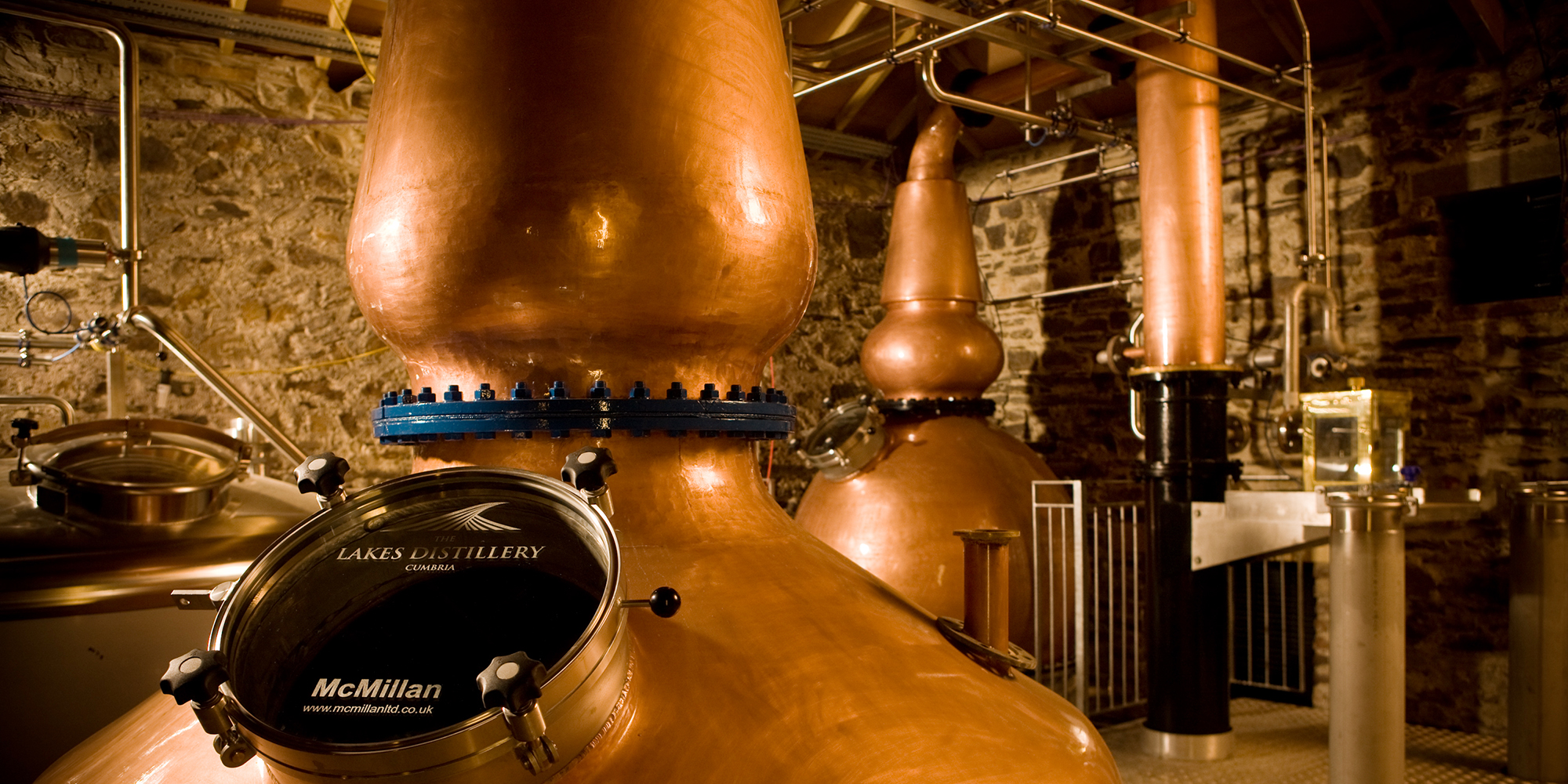
There’s lots of things you can do around Keswick when it’s raining. From the bustling markets and quaint cafes of the town itself, to the sophisticated distillery tours and historic mining museums. But for those who like to keep active the old slate mines at Honister are an ideal dryish activity, while the Keswick climbing wall also boasts a cafe! Here’s a few of our ideas for you
The Lakes Distillery
Fine food and extra fine booze. What’s not to love. Not just a maker of exquisite gin, The Lakes Distillery is the crafter of the finest English Whisky. As well as tours of the distillery there are numerous tasting experiences and a delicious bistro.
www.lakesdistillery.com/
Keswick Brewery
You can never tour too many breweries! Keswicks brewery not only offers tours, but also has its own bar.
www.keswickbrewery.co.uk/
Honister Slate Mines
Learn about the fascinating history of slate mining in the Lake District while exploring the old mine shafts.
www.honister.com/product/mine-tours/
Threlkeld Railway and Quarry Museum
Pan for (fake) gold while you wait for the narrow guage train to take you up the steep track to the top of the mine where you can explore old exavators.
www.threlkeldquarryandminingmuseum.co.uk
The Puzzling Place
Enjoy optical illusions and puzzling puzzles. A great quick town escape.
www.puzzlingplace.mobi/
Keswick Launch
Huddle inside one of the Keswick Launches and enjoy the spectacular scenery around Derwent Water.
www.keswick-launch.co.uk/
Kong Adventures
Whether a total novice or experienced climber Kong Adventure, in the centre of Keswick is a great active wet weather option.
www.kongadventure.com/
Keswick Climbing Wall
Just a 20 minute walk from Low Nest, next to the Castlerigg stone circles is Keswick Climbing Wall. Great for experienced and newbie climbers, with the added bonus of a cafe!
www.keswickclimbingwall.co.uk
Lakeland Culture

Dove Cottage and Wordsworth Museum – www.wordsworth.org.uk
Heaton Cooper Studio – www.heatoncooper.co.uk
World of Peter Rabbit – www.hop-skip-jump.com
Windermere Jetty Museum – www.lakelandarts.org.uk/windermere-jetty-museum
Hill Top Farm – www.nationaltrust.org.uk/hill-top
Wordsworth School – www.hawksheadgrammar.org.uk
Wordsworth House and Gardens – www.nationaltrust.org.uk/wordsworth-house-and-garden
Brantwood, Coniston – www.brantwood.org.uk
Muncaster Castle – www.muncaster.co.uk
Trains, Boats and Wildlife

Ravenglass and Eskdale Railway – www.ravenglass-railway.co.uk
The Lakeside and Haverthwaite Railway – www.lakesiderailway.co.uk
Windermere Jetty Museum – www.lakelandarts.org.uk/windermere-jetty-museum
Lakes Aquarium – www.lakesaquarium.co.uk
Coast Aquarium, Maryport – www.coastaquarium.co.uk
Lake District Wildlife Park – www.lakedistrictwildlifepark.co.uk
Get On The Water

Ullswater Steamer – www.ullswater-steamers.co.uk
Keswick Launch – www.keswick-launch.co.uk
Windermere Cruises – www.windermere-lakecruises.co.uk
Coniston Gondala – www.nationaltrust.org.uk/steam-yacht-gondol
Self Drive Motor Boat – All the main lakes have self drive motor boats available to hire. Most have an en closed cabin so you can enjoy the beauty of the lakes, but in the comfort of the sheltered cabin.
Get Active

Kong Adventure – www.kongadventure.com
Keswick Climbing Wall – www.keswickclimbingwall.co.uk
Ambleside Climbing Wall – www.amblesideadventure.co.uk/ambleside-wall
Kendal Climbing Wall – www.kendalwall.co.uk
Finally
One last option; grab a coat and get out for a lovely walk in the rain. If the weather forecast is bad then we wouldn’t recommend doing anything to high or out of your comfort zone. But the rain gives a whole new dimension to the views you’d normally get. Particularly round tarns and lakes. As Billy Connolly says: there’s no such thing as bad weather, just bad clothes. So grab ya wellies and enjoy the Lake District at one of its finest moments.
We’ve decided to start a blog! We’ve tried to start one on numerous occasions, but wanted to wait for a momentous occasion, or the start of a week/month. We also didn’t know what to write about, but with both of us now working at Low Nest and with the management of the land we’re finding so many funny anecdotes we want to share with you all.
It might not be daily and we might forget to keep it up to date, but we hope to share anecdotes and stories of what life is like at Low Nest.
Cheers everybody.
We’re hatching chicks! The chickens have been a major focal feature for Low Nest over the last 12 months. With plenty of space we decided to get a couple more chickens, but instead of just buying point of lay 14 week old chickens we fancied a challenge; hatching and raising our own chicks!
This post is just a bit of a guide for anybody looking to follow suite and raise their own chickens from fertilised eggs.
What equipment is required to Hatch Chicken Eggs?
Egg incubator
Fertilised poultry/fowl eggs
That’s it, you really don’t need much to get started. When they hatch and grow, then you need a lot more kit!
What is an egg incubator?
An incubator simulates the heat and humidity of a nesting hen. A broody hen will spend 21 days sitting and meticulously tending to it’s a cluster of eggs, not going out to eat or drink. The most basic set ups only maintain temperature and humidity. However spend a bit more and you can get incubators that will also turn the eggs. Turning the eggs, so they don’t grow un even in the egg is critical. A mothering hen will naturally turn all her eggs on a regular basis. If you have a basic incubator then you will have to turn the eggs 3 times a day (more on this below).
Some people do build their own. You can do this and you can buy some really cheap ones. However you pay for what you get. In the UK the most recommended brand is Brinsea, they’re not just market leaders but really the only choice.
The key things to look for is a thermometer and ideally a hygrometer as well as an egg turning function. However ours doesn’t turn the eggs as we like to do this, it just adds to the routine for us.
Where to buy Fertilised Chicken Eggs
Where do you buy fertilised chicken eggs? No, not the shops! Without going into biological details; a rooster has to be involved, and no egg farm has a rooster on site. The best thing you can do is ask a local farmer or chicken keeper. However; you can also buy online. The big risk of online ordering is damage caused during postage.
In the wild (or back garden), a Hen wouldn’t immediately sit on a cluster of eggs. Simply because it doesn’t produce 6 eggs at once. It will build up a collection over a couple of days. So it is quite natural for eggs to sit out in freezing cold temperatures for a couple of days, even weeks, before they are sat on to be hatched. When you get your eggs don’t rush to put them into the incubator. Let them rest at room temperature with the pointy end pointing downwards.
Step 1 – Set up and adding the eggs
Get your incubator set up 24 hours in advance. It will get up to temperature fairly quickly, however this time allows you to check it is at the right temperature. Different poultry and fowl require different temperature:
Chickens: 37.5 – 37.6C
Pheasant: 37.6 – 37.8C
Quail: 37.6 – 37.8C
Ducks: 37.4 – 37.6C
You’re looking to maintain a humidity of around 75%. This is done on most incubators with the addition of a water well. You can generally top the water up from the outside, so as to avoid too much interference.
Before adding the eggs, mark one side of them with an “X” and the other side with an “O”. Doing this allows you to track the rotations.
Step 2 – First 7 Days
If you’re having to manually rotate the eggs then do so a minimum of 3 times a day and always an odd number. Doing it an odd number of times avoids the risk of one side being left facing the same way two night in a row.
Step 3 – Day 8 to 18
After Day 7 or 8 you can start to “Candle” the egg. This basically means you put a light up to the base of the egg and allows you to check the development of the embryo. It’s also a very cool thing to do!
You can buy specific lights, I think some incubators even have them built in. However a torch and a toilet roll to hold the egg and direct light is just as good.
Step 4 – Day 19 to 21
It’s now time to leave the eggs alone for the final push, no more turning.
Step 5 – Hatched!
Yay, the eggs have started to hatch! Just remember that in the wild hatching has a 75% success rate. In an incubator it can very easily be zero. So if it doesn’t work this time then try again!
But if you eggs have hatched. The head and beak will poke through first. The chick might then take 8 to 12 hours to rest an acclimatise to the fresh new world. After that it will break itself free and dry off in the warmth of the incubator.
Don’t worry about moving it over to the Brooder immediately. A chick can survive a couple of days in an incubator. But once it’s active and moving for 12 to 24 hours, move it over to the Brooder.